
How GeekDance Handles Local Compliance for Overseas Markets
Geek Dance | Technical Go-Global Consulting – Opening Overseas Markets for Enterprises
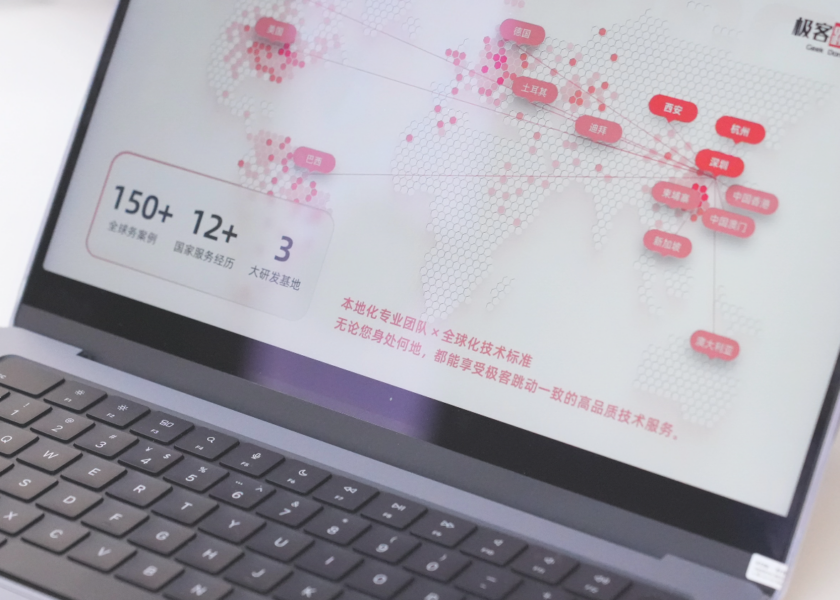
Going global has shifted from being an “optional strategy” to a “must-answer question” for enterprise growth. From smart hardware to software platforms, from data services to AI solutions, more and more technology products aim to expand internationally. Yet, those that truly establish a foothold overseas are the ones that can overcome language, regulatory, and cultural barriers and precisely meet local needs. The essence of technology globalization is never just product export—it is about creating localized value through global technical capabilities. In its service practice across 12+ countries, Geek Dance implements a “localized professional team + global technical standards” model, ensuring technology takes root in over 80+ global service cases.
1. The Core Challenge of Going Global: From “Going Out” to “Fitting In”
The essence of technology globalization is making technology truly integrate into local market scenarios. User needs, industry rules, and cultural habits differ significantly across countries. For instance, in business communication, the Japanese market demands precise and efficient real-time recording and translation tools, while the North American market values smooth multilingual switching; in healthcare, Europe enforces strict data privacy compliance, whereas Southeast Asia focuses more on convenience and accessibility; in consumer scenarios, usage habits and feature expectations for smart devices vary widely across regions.
Successful technology globalization requires moving beyond a “replicate domestic experience” mindset and understanding local needs from a global perspective. This means products must not only solve functional problems but also adapt to local “implicit rules”—from user habits to data compliance standards, from service response patterns to cultural nuances—upgrading technology from “usable” to “user-friendly” and ultimately becoming a tool that local users rely on.
2. Key Challenges of Going Global: Overcoming “Invisible Barriers”
In practice, global technology expansion faces three core challenges that test an enterprise’s ability to implement internationally:
1. Localization Adaptation: Making Technology “Understand” Local Needs
User needs can vary far more than expected. In cross-border trade, transaction processes and communication habits differ: some regions require real-time multi-currency settlement, others value historical data visualization; in smart hardware, users may prioritize precise positioning or secure data storage. Failure to accurately capture these differences can leave products struggling to gain acceptance in local markets.
2. Compliance & Security: Building a Protective Barrier for Technology
Regulations vary widely across regions. Europe’s GDPR restricts cross-border data transfers, the US HIPAA enforces strict healthcare data privacy, and certain Middle Eastern countries mandate local data storage. Ignoring compliance risks can result in product removal or severe fines and reputational damage.
3. Service Support: Providing a Solid Backbone for Technology
Long-term success overseas relies on localized service support. Time zones, language barriers, and contextual understanding can delay issue response and affect user experience. Timely, professional support directly impacts reputation and user retention.
3. The Success Logic: Global Capability × Local Execution
Technology products that thrive internationally often combine “global technical infrastructure + local execution capabilities.” This requires building three core competencies:
1. Flexible Technical Architecture: Supporting Global Adaptation
A global technology architecture must be scalable and able to respond quickly to market changes. Multi-language switching, multi-currency settlement, and flexible compliance modules all require an adaptable underlying infrastructure.
2. Local Insight Capability: Precisely Matching Needs
Through in-depth local research, user habits, cultural characteristics, and industry pain points are translated into product features, allowing technology to solve real local problems.
3. Full-Cycle Service System: Ensuring Long-Term Value
From needs research to operations, providing ongoing localized services—including training, inspection, and iterative optimization—ensures technology continues to deliver value as markets evolve.
4. Going Global Requires a Partner Who “Understands the World and the Local Market”
Choosing the right partner can make the process more efficient and outcomes more reliable. This partner must have a global technical vision to support flexible adaptation in different markets, a deep understanding of local regulations and user needs to mitigate compliance risks and demand mismatches, and a local service network to ensure solid support once technology is deployed.
As a globally trusted enterprise digital strategy partner, Geek Dance has accumulated solid experience in technology globalization. Its core team comes from leading companies such as Alibaba, Tencent, and Google, with 10+ years of development experience, serving 100+ enterprises across 12+ countries, and operating three R&D offices worldwide. Through the “localized professional team + global technical standards” model, Geek Dance provides end-to-end support for technology globalization.
In business, Geek Dance covers high-end software customization, smart hardware integration, and AI product development, offering an integrated solution from needs research and compliance design to technology development and localized services. Whether it’s real-time translation + AI recording systems for Japan or pet-tracking apps + hardware integration for North America, Geek Dance’s mission is “technology-driven business evolution,” ensuring precise global deployment and helping enterprises achieve “47% improvement in average operational efficiency per client.”
If your enterprise is planning to go global or encountering adaptation, compliance, or service challenges in overseas markets, focus on the core principle: the key to successful technology globalization is “respect differences, implement precisely.” Partnering with a team that understands the world and the local market transforms technology from a “foreign visitor” to a “trusted helper,” which represents the core value of Geek Dance’s 10+ years of global technology practice.