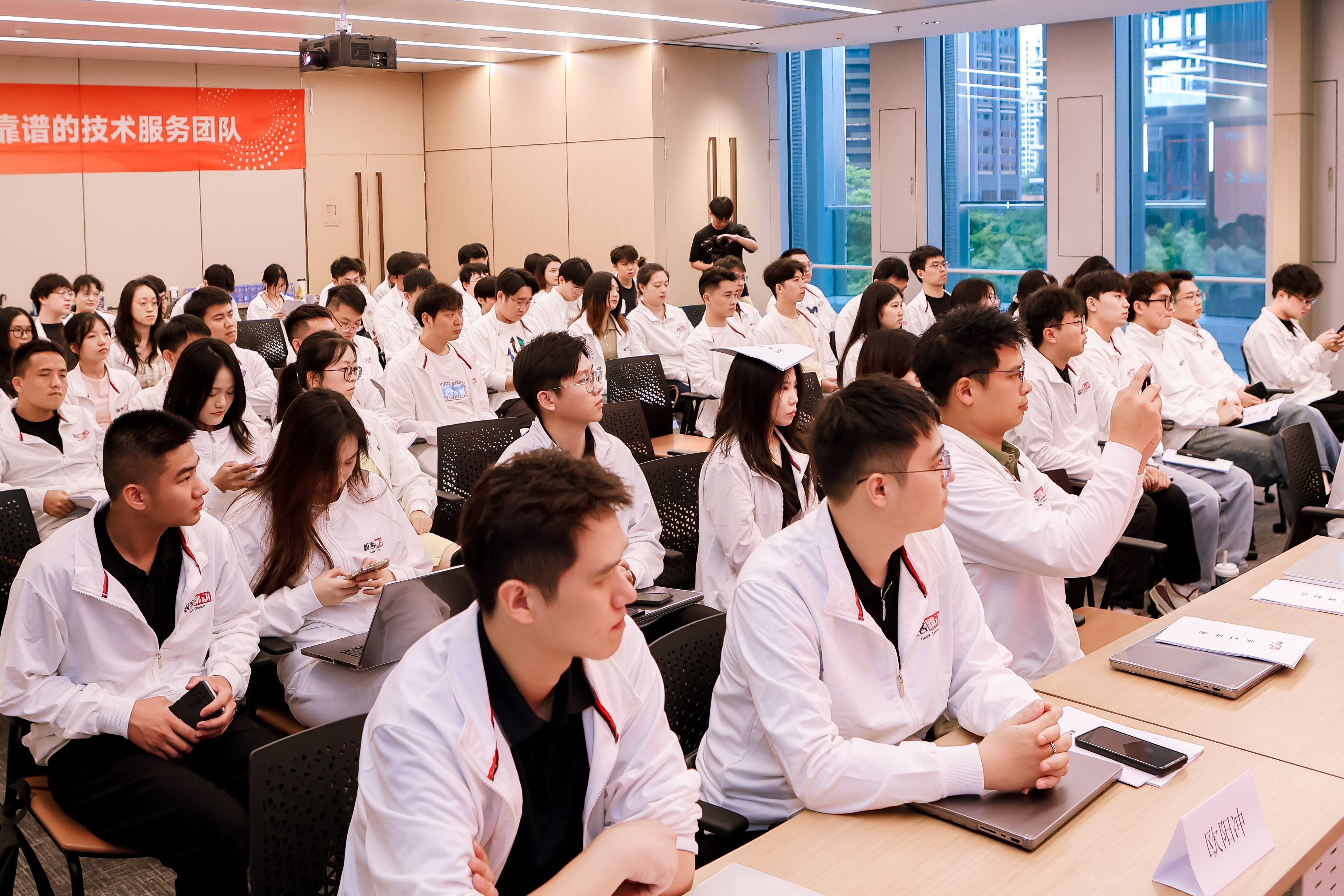

Building Shenzhen’s Most Reliable Tech Service Team
Hello friends, I am the founder of GeekDance. Before founding GeekDance, I worked as an architect at Alibaba, deeply involved in the technology field for many years, and later went through several entrepreneurial ventures. Perhaps influenced deeply by my experience at Alibaba, I carried forward the valuable cultural principles I experienced there — “Customer First”, “Pragmatic & Reliable”, “Continuous Review” — into the development of GeekDance. These principles became the foundation that helped our team grow from a small group of a dozen people to where we are today.
In August 2015, I gathered a group of tech professionals from Alibaba, Tencent, and Google with a simple initial goal: to build a company that “not only delivers technology, but understands business and is reliable.”
At that time, digital transformation was not yet a buzzword, but we already realized that the future competition among enterprises is essentially a competition of “technology implementation capabilities.” Our “big company genes” perfectly supported this capability — Alibaba’s technical frameworks, Tencent’s product mindset, Google’s global perspective, and verified cultural values all became GeekDance’s “initial assets.”
Ten years later, our original goal remains unchanged, with an added clearer mission: “Using technology to help enterprises succeed and grow together”, becoming a trusted digital strategy partner for businesses.

1. Core Advantage: Beyond Technology, Focused on “Solving Real Problems”
Over the years, many people have asked us: “What is GeekDance’s core advantage?” I rarely start by saying “we have so many patents” or “we completed so many projects.” Instead, I first talk about how we understand client needs.
In my view, digital transformation is not just about “installing a system for an enterprise”, but about “embedding technology into every part of the business” — like a doctor treating a patient: you can’t just prescribe medicine; you need to understand the patient’s condition and root causes to effectively solve the problem.
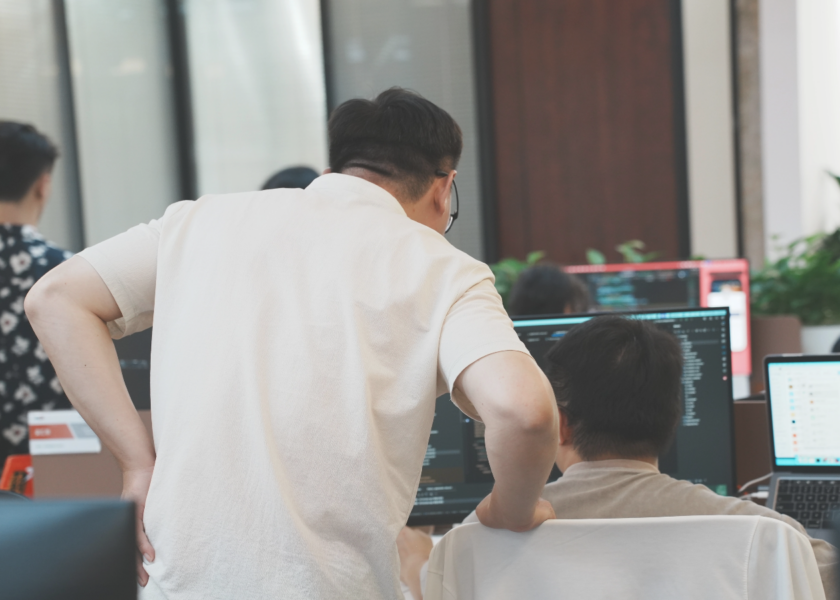
For example, last year we served a logistics company. Initially, they said they “needed a delivery system.” Our solution experts and technical consultants formed a dedicated team and didn’t start developing immediately. Instead, we conducted in-depth interviews with delivery managers, sorting team leaders, and frontline delivery staff. We mapped out the full process from cargo arrival, sorting, order assignment, to final delivery. We also analyzed three months of delivery data to identify time-consuming steps and areas with frequent complaints, and noted common issues raised by frontline staff, such as repeated routes or mismatched delivery areas after sorting.

Through this systematic research and requirement analysis, we discovered that the client’s real pain point was not “lack of a system,” but the “handoff gap between sorting and order assignment causing ineffective deliveries.” So, instead of building a complex full-process system, we developed a targeted “intelligent sorting – order assignment linkage” feature — automatically matching cargo with delivery areas at scan, and recommending optimal routes based on real-time traffic.
Within two weeks of launch, their delivery efficiency improved by 30%. The manager repeatedly said: “This is the most useful solution. Working with you isn’t just a ‘pay for code’ deal, it’s like having a tech partner who understands our business.”
This “pragmatic problem-solving” mindset comes from the “results-oriented” big company DNA — we never show off technology for its own sake, only focus on whether it creates value for clients. This is GeekDance’s core principle: technology is a tool; business outcomes are the goal.

2. Technical Depth & Team Growth: From a Dozen to Shenzhen’s Top 3 Tech Service
Over the years, we have invested over 80% of our resources in R&D. On one hand, this continues the “technical depth” requirement from big companies; on the other hand, it allows our technology to flexibly adapt to different industries.
For instance, in smart hardware integration, we don’t just connect facial recognition and smart access hardware; we also use Alibaba’s “full-link thinking” framework to help retail companies optimize store traffic using access data and help manufacturing clients reduce downtime using device data.
In AI services, as one of the first domestic teams integrating ChatGPT, we don’t just connect APIs, but with a “customer first” mindset, help education companies design how large models fit teaching scenarios, and assist customer service teams in keeping AI responses humane.
So far, we have grown from a team of a dozen to over 200 people. With this technical expertise and service philosophy, we are now ranked among Shenzhen’s top 3 tech service providers, serving over 100 enterprises and completing over 100 high-end projects.

Seeing our clients’ operational efficiency improve, I am more convinced: good tech services are never “one-time deliveries”, but “long-term growth companions”; good partnerships are never “one-off deals”, but “trusted technical collaborations”.
3. Values in Action: Embedding “Reliability” in Every Service
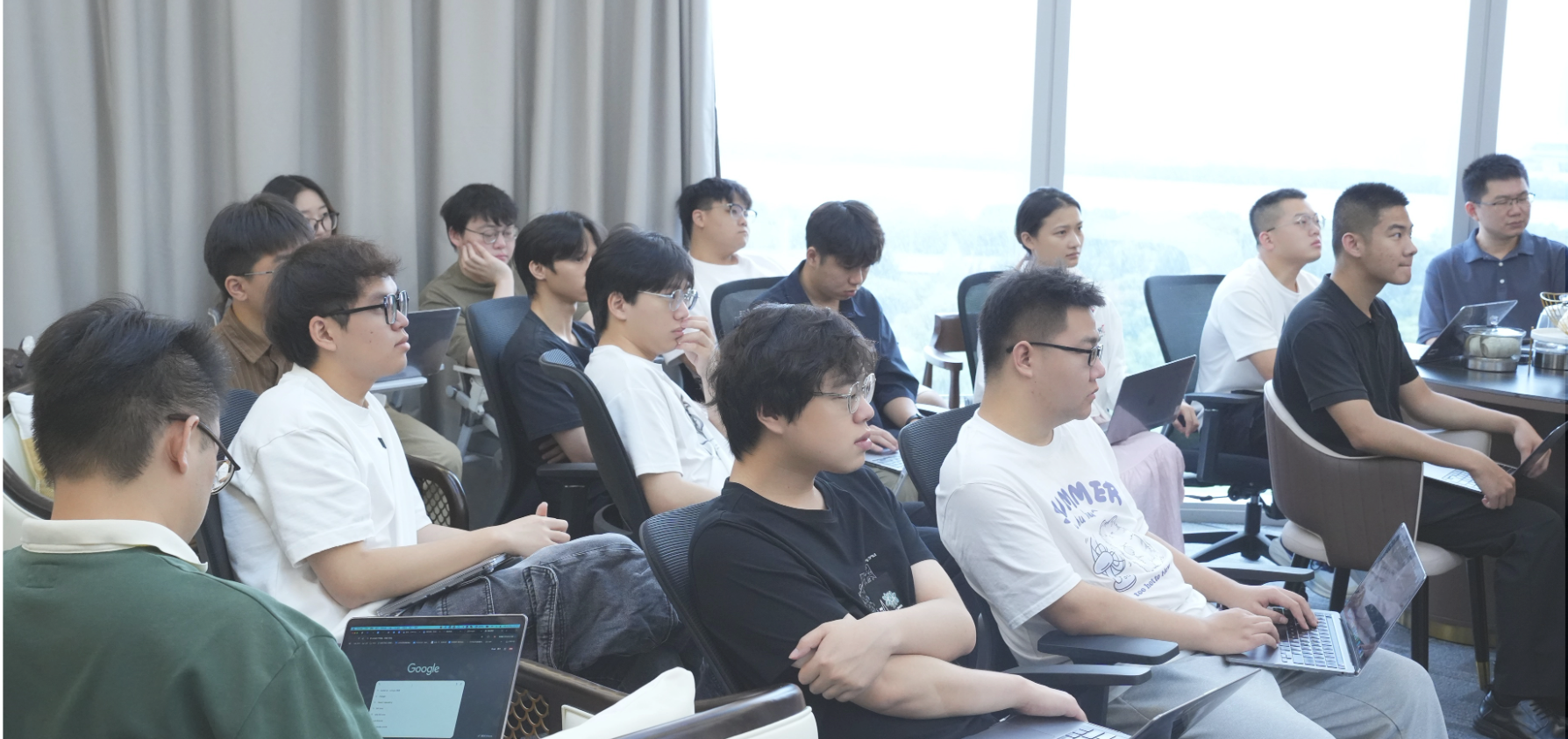
Our team is our most valuable asset, and the core of our team is the big-company values we continue to cultivate — this is why clients trust us. Among the 200+ members of GeekDance, over 60% have 8+ years of software development experience. What matters most is not “big-company resumes,” but the ability to implement “customer first” in every detail.

For example, Alibaba’s “review culture”: after each project, we gather tech, product, and business teams to analyze “what went well and what can be improved,” storing successful strategies for future projects — not to save time, but to provide clients with mature solutions.
Another example: “Customer First”. We often say, “Professionalism is duty; service is the barrier to winning the future.” This is not just a slogan, but a principle in action: if a client’s budget is limited, we help prioritize essential features and defer others rather than recommending the most expensive solution. After launch, we actively follow up on usage, even reminding clients about new compliance requirements.
One startup selling pet products wanted to add a “nearby pet hospital” feature in their app but lacked resources. We remembered a medical client we worked with before and proactively connected them — these actions may seem beyond contract scope, but to us, it’s about solving real problems and helping clients cross transformation hurdles.
Once, our team stayed up until 2 a.m. upgrading a system. The client messaged: “No rush, you can do it tomorrow.” Our tech lead replied: “You have new business starting next week, we’ll work tonight to keep your schedule on track.”
4. Handling Tech Iteration: Using “Vision” & “Responsibility” to Maintain Reliability
Over the years, we established 3 global R&D offices and a “Tech Lab,” with one goal: to ensure our “reliability” keeps pace with tech iterations — clients’ transformation cannot be held back by outdated technology.
When ChatGPT first opened APIs, our lab spent three months testing, identifying “industry adaptation scenarios” and “data security boundaries” to prevent client pitfalls. When smart hardware emerged, we proactively connected with more than ten reliable hardware vendors, applying big-company supply chain thinking to help clients avoid “hardware-software incompatibility.”

In this era of rapid tech iteration, “continuous learning” is not just an individual expectation, but a corporate survival rule. One of our core values, “daring to lead,” means taking responsibility for clients’ long-term interests: rejecting short-term but ineffective solutions, spending time refining systems that truly land, and proactively providing low-cost optimizations during client business adjustments. This is why we grew from a dozen to over 200 people, reaching Shenzhen’s top 3.
5. Client Trust & Future Vision: From “Partner” to Shenzhen’s No.1
When asked what I am most proud of, it’s not growth or status, but when a client in Shandong invited us to their annual meeting, and the CEO said: “GeekDance is not our service provider, but our own digital team, a tech partner we can grow with.” Another client shared: “With other tech companies, projects end and we part ways. With GeekDance, you proactively ask ‘Should we adjust the system for upcoming business?’ and help us find ways to reduce costs and improve efficiency — this is what a long-term partner looks like.” Being trusted as a partner is more valuable than any performance metric.

Our goal goes beyond this. In the future, we aim to grow from Shenzhen’s top 3 to top 1, expand the team from 200+ to over a thousand, and eventually go public. These goals are not empty words — “Building Shenzhen’s most reliable tech service team” is something we practice in every project: from understanding business during the first requirement discussion, to consistent follow-ups post-implementation, to adjusting with business changes — every step solidifies trust.
I believe, with this dedication to “reliability,” the next decade will see not only growth in scale and status but also GeekDance becoming synonymous with “the trusted choice for enterprise digital transformation,” helping more companies achieve real growth through technology.
6. To Enterprises in Transformation: We Offer “Reliable Paths Aligned with Your Business”
If your company is considering digital transformation, whether at the “0 to 1” start-up stage or breaking through “1 to N” bottlenecks, we welcome a conversation. We may not offer the “flashiest tech solutions,” but we will provide the most practical, reliable, and business-aligned solutions that truly work. We don’t aim to be a “one-off tech provider,” but a long-term partner growing with you and responding to market changes.
After all, this is the original intention we inherited from Alibaba — treating clients’ challenges as our own, and their growth as our goal. This is the reason we want to have a long-lasting presence in Shenzhen and the industry — exchanging sincerity for trust, and reliability for a sustainable future.